API Rate Limits, Blind Spots, and Hard Lessons Learned
I built a fantasy sports book only to discover a huge blind spot: the API powering my project had a strict rate limit. Instead of panicking, I found a way to stretch resources, track my usage, and keep my project alive. Here’s the story of how I nearly broke everything and what I learned before it was too late.
API Rate Limits, Blind Spots, and Hard Lessons Learned
Tags
#APILimits #CodingLessons #FantasySportsBook #DataManagement #DeveloperJourney
Sometimes the biggest lessons come from the smallest blind spots.
Here’s my confession: I built a fantasy sports book that uses API data to update games, scores, lines, and odds. Sounds great, right? Except… I completely overlooked the API’s rate limit. Turns out, I only get 500 calls per month.
At first, I tried to make the math work:
- 500 calls ÷ 4 weeks ≈ 125 calls per week
- 125 ÷ 7 days ≈ 17.5 calls per day
- So maybe 1 update per hour for 16 hours a day? Bob’s your uncle, problem solved… right?
Not so fast.
Updating NFL and NCAA scores and lines ate through my calls faster than I realized. My “simple math” was way off. Thankfully, I discovered this problem at the end of the month, just before the counter reset. That gave me some room to experiment and figure out a fix.
The Fix
Instead of hammering the API, I:
- Created a database to hold/save/serve API data.
- Managed calls via admin controls so users could access data without draining my API quota.
- Split functions — previously I was making 5 calls every time (scores + lines + odds). Now it’s 3 and 2 separately.
That helped, but when I checked back after two weeks… I had already burned through 40% of my calls when I should have only been at 30%. Yikes.
The Real Fix
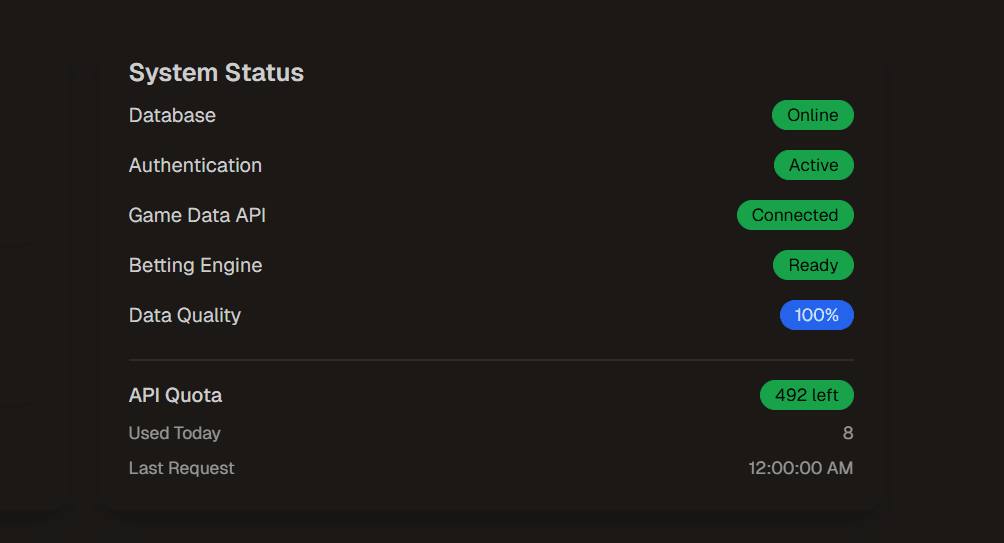
I went back to the documentation (what a concept) and started tracking my API access. Now I have visibility into usage, control over calls, and the project survives.
The lesson? Blind spots will sneak up on you, but they’re also some of the best teachers — if you catch them in time.
So, what about you? What mistakes have you caught before they got really bad? Let me know — I’d love to hear your stories.
Attribution: This article was generated with 30% rambling from Proper and 70% refinement by GPT-5.